You built something special. A curated store, a loyal customer base, a brand people trust. The last thing you should be doing is quietly handing thousands of dollars a year to Visa and Mastercard.
There's a better way. And it's completely legal.

Retail is hard. Inventory, staffing, rent, seasonality — the list of pressures never gets shorter. And sitting quietly at the bottom of every monthly statement is a processing fee that most boutique owners have just accepted as a cost of doing business.
The average retail store pays between 2.5% and 3.5% on every card transaction. On $30,000 a month in sales — which is modest for a busy boutique — that's $750 to $1,050 gone every single month. Over a year that's $9,000 to $12,600. Over five years that's real money.
Money that could go toward new inventory. A part-time hire. Your own paycheck.
Of the three programs available to merchants, dual pricing is the best fit for most retail and boutique environments. Here's how it works in practice:
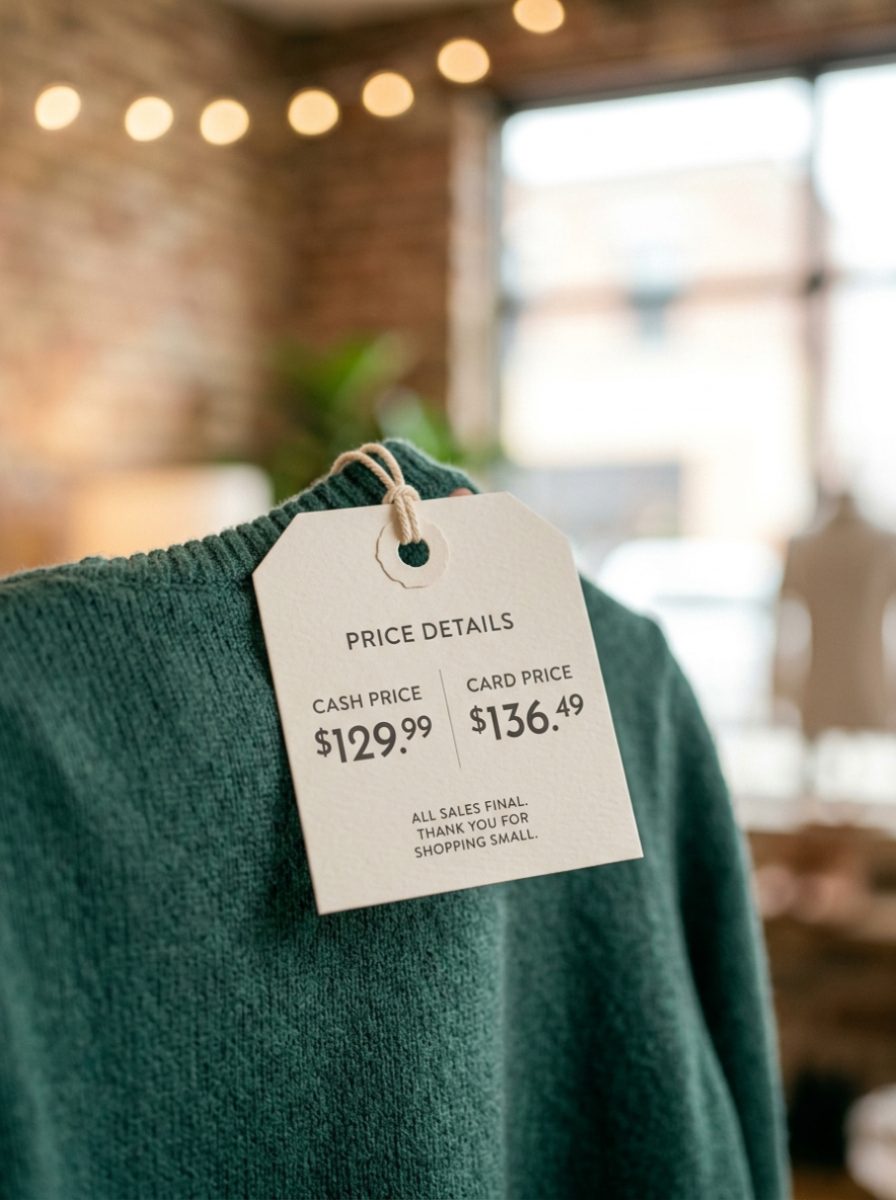
You display two prices — a cash price and a card price. The card price is slightly higher and covers your processing cost. Customers see both prices on your tags, your POS display, and your signage before they ever get to the register.
No surprise fees at checkout. No awkward conversations. Just transparency — which fits perfectly with the kind of relationship boutique owners build with their customers.
What it looks like on the floor:
That's it. Once it's set up, it runs itself.
| Monthly Card Volume | Current Fees (at 2.9%) | Monthly Savings | Annual Savings |
|---|---|---|---|
| $15,000 | $435 | ~$413 | ~$4,950 |
| $30,000 | $870 | ~$827 | ~$9,920 |
| $50,000 | $1,450 | ~$1,378 | ~$16,530 |
| $75,000 | $2,175 | ~$2,066 | ~$24,790 |
Savings reflect ~95% recovery rate accounting for cash-paying customers.
Customers have been seeing cash and card prices at gas stations for decades. What matters is that it's clear, upfront, and framed the right way. When customers understand they have a choice — and that the card price simply reflects the real cost of that payment method — most take it in stride. Your regulars trust you. A simple explanation from you or your staff goes a long way.
Your POS handles the dual pricing display automatically — no manual math, no retagging every item. Your staff selects the payment method at checkout and the system applies the correct price. For physical tags, most boutiques add a small card price alongside the cash price, or use a simple sign at the register. We walk you through all of it during setup.
Not if it's positioned correctly — and we help you do that. The framing matters. "Cash discount available" lands very differently than "card fee added." You're giving customers a choice, not penalizing them.
Dual pricing is legal in all 50 states. It requires no card network registration. And unlike surcharging, it can be applied regardless of whether a customer pays with credit or debit. The compliance requirements are straightforward: clear signage, accurate receipts, and a POS configured to display both prices. Every FeeSlicers merchant is set up with all of this in place before they go live.
FeeSlicers was founded by two payments veterans who built and sold a payment gateway. We've worked with retail merchants in markets across the country and we know what works — and what doesn't — for businesses like yours. When you reach out, you talk to George — someone who has been in this industry for years and will give you a straight answer about whether this program makes sense for your specific situation. If it's not the right fit, we'll tell you that.
I was skeptical at first but my customers barely noticed the change. I'm saving over $800 a month and I wish I'd done it sooner.
George walked me through everything. Setup was easier than I expected and the savings showed up on the very first statement.
It's free, it takes two minutes, and there's zero obligation. Tell us a little about your business and we'll show you the real numbers.
Ready to move forward?