
Both totals on the estimate, before the car goes on the lift.
Repair tickets are big, and customers read every line of them. FeeSlicers sets up dual pricing for independent repair shops, tire shops and service centers so the cash total and the card total are on the estimate the customer approves, and on the invoice they pay.
Two minutes to start. No obligation. George takes it from there.
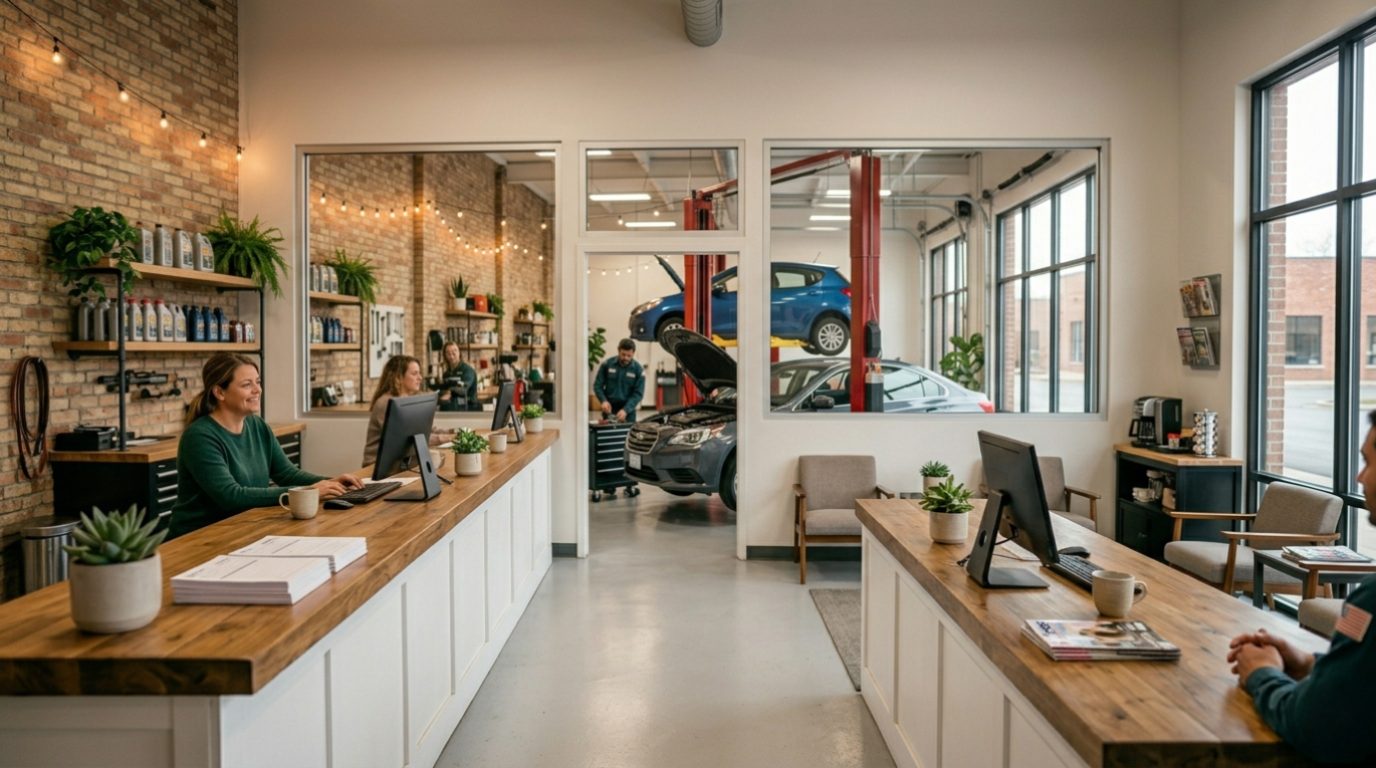
An $850 ticket is a conversation, not a tap.
At a repair shop, the price isn't on a board. It's built for each car: parts, labor hours, shop supplies, tax. The service writer calls with an estimate, the customer approves it, and they pay when they pick up the keys, often with a card because nobody carries $850 in their wallet.
Plenty of repair customers do pay cash or want to, especially for older cars and smaller jobs. Dual pricing puts that choice on the estimate, next to the card total, before anyone approves the work.
With Edge, North's dual-price program, every ticket has a cash total and a card total about 4% higher, the same for credit and debit. An $850.00 brake job is $884.00 on a card. A $2,400.00 transmission repair is $2,496.00.
From the estimate to the pickup counter.
The estimate
Write it with both totals at the bottom. When the service writer calls, they read the card total and the cash total, so the customer approves the work knowing exactly what each will be.
The invoice
The final invoice repeats both totals. Payanywhere's Retail mode can build invoices and keep customer profiles, so a returning customer's history is there next time.
The pickup counter
A Smart PINPad Pro puts the merchant screen on your side of the counter and a PIN pad on the customer's. The customer sees both totals, pays, and gets a receipt with the price they paid.
Fleet accounts and phone approvals.
Shops that service a landscaper's trucks, a plumber's vans or a dealership's loaners usually bill by invoice. Those invoices show both totals like any other, and Payments Hub's virtual terminal takes card payments over the phone when the fleet manager calls in. Card-on-file is there for accounts that ask you to keep their card for recurring service.
Big jobs that need a deposit work the same way: quote the deposit with a cash and a card amount, and take it on the counter device or the virtual terminal.
Funding is next-day by default, with same-day available when you batch out in the evening.
Program costs for a repair shop.
One free Payanywhere Smart device per location for qualifying merchants through December 31, 2026. Requires a $5 monthly service fee and a $25 monthly minimum. Software subscription applies.
Labor rates, posted correctly.
If your labor rate is on a sign in the waiting room, it needs a card rate with the cash rate next to it: a $120.00 hourly rate is $124.80 on a card. Estimates and invoices carry both totals, and North's two-price notice belongs at the service counter in English and Spanish. Posting rules vary by state, so read your state's page and keep your estimate forms in line with it.
What shop owners ask.
Do I show two totals on every estimate?
Yes. The card total should always be on it, with the cash total beside it, so the price the customer approves matches what they see at pickup.
Does my shop management software support two totals?
That depends on the software. Some shops add both totals to their estimate template; others build invoices in Payanywhere's Retail mode. George will look at how you write tickets now and suggest the simplest route.
A customer is paying part cash, part card. What happens?
Ask George how split payments are handled on your device. He'll go through it with your service writers before you go live.
What about warranty and insurance work?
Work paid by a warranty company or insurer follows that payer's terms. Talk to George about the mix of work you do so your setup and your posted prices match how you're actually paid.
At a repair shop the estimate is where I start. We get both totals onto the form your service writers already use, then set up the counter device so the customer sees the same two numbers they approved on the phone.
Two totals on your next estimate.
Tell us how your shop writes tickets. George sets up the counter and the paperwork with you.
Two minutes to start. No obligation. George takes it from there.