You already know what dual pricing looks like. Every gas station in America posts a cash price and a credit price on the pump. Customers have been choosing between the two for as long as any of us can remember. Nobody complains. Nobody drives to the next station over 8 cents a gallon.
Your liquor store or convenience store can do the exact same thing, and the savings are even bigger than you think.
This is the simplest sell of any vertical we work with, because your customers already live with this model every time they fill up their tank.
Cash discount is the classic convenience-store framing: your posted price is the card price, and customers who pay cash get a discount off that price. "Cash discount" sounds like a reward rather than a fee, it's the exact model gas stations and convenience stores have used for decades, and it's often the more natural fit for this vertical.
Dual pricing achieves the same economics with different framing: you post two prices side by side, cash and card, and the customer picks. Legal everywhere, no registration required.
Either way, the customer experience is nearly identical: they grab their purchase, see their price, pay however they want. Cash customers get the lower price. Card customers pay a little more. Done.
For liquor stores and convenience stores specifically, the math is compelling because of your volume. You might be processing 200-400 card transactions a day at an average of $15-$40. Each individual fee is small, but they compound fast.
If the program isn't set up correctly, it can legally be reclassified as a surcharge, which has different compliance requirements and state restrictions. This is one where the configuration has to be exactly right. We handle all of that, whichever framing you choose.
| Monthly Card Volume | Current Fees (at 2.9%) | Monthly Savings | Annual Savings |
|---|---|---|---|
| $40,000 | $1,160 | ~$1,102 | ~$13,224 |
| $70,000 | $2,030 | ~$1,929 | ~$23,142 |
| $100,000 | $2,900 | ~$2,755 | ~$33,060 |
$13,000 to $33,000 a year. That's inventory. That's a renovation. That's the difference between a tight year and a good one.
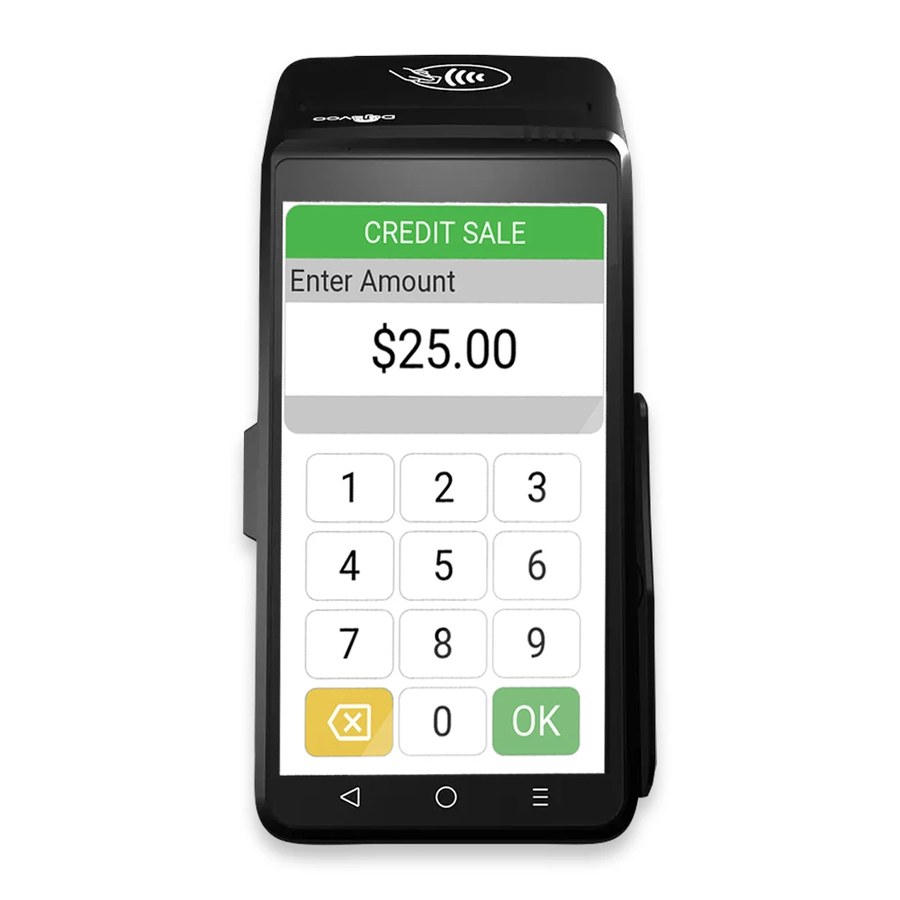
High-transaction environments need a terminal that keeps up. The QD4 processes transactions quickly, handles dual pricing and cash discount programs automatically, and has a small enough footprint that it doesn't crowd your counter. Built-in printer for receipts, contactless for tap payments, and it connects via Wi-Fi or Ethernet.
Most liquor and convenience stores qualify for a QD4 at no upfront cost through our free terminal program.
Running multiple registers? We'll set up a terminal at each lane. Ask George for exact per-lane pricing for your setup.
See If You Qualify →Dual pricing applies to any card transaction you process. Tobacco, lottery (where allowed by state), alcohol, snacks, beverages, it's all the same at the terminal. The pricing is on the payment method, not the product category.
EBT transactions are government benefits and are handled separately from dual pricing or surcharging, no additional fees apply to EBT purchases.
No. The terminal sits alongside your existing POS. Your inventory system keeps doing what it does. The terminal handles the card payment with dual pricing built in. Two separate systems, both doing their job.
Your competitor is also paying $15,000-$30,000 a year in fees they don't have to pay. Meanwhile, gas stations across the street have been posting dual prices for years and nobody's boycotting them. The economics strongly favor stores that make the switch.
We do about $90K a month in cards across two registers. George set us up with dual pricing on both terminals in one visit. Customers see the prices, they pick one. Maybe one person a week mentions it. We're keeping an extra $2,400 a month.