The average restaurant pays 2.5% to 3.5% on every card transaction. In an industry where 4% net profit is considered a good year, that's not a rounding error. That's the difference between making it and not.
There's a legal, proven way to stop paying those fees. Gas stations have been doing it for decades. Now it's your turn.
Restaurants face cost pressures that most businesses never deal with. Food inflation, minimum wage increases, delivery platform commissions, staffing — the margin squeeze is real and it comes from every direction.
Processing fees are unique because they're invisible. They don't show up as a line item on your P&L the way food cost does. They just quietly drain 2.9% of every card transaction, every single day, while you're focused on running the floor.
On $60,000 a month in card volume — realistic for a busy independent restaurant — that's $1,740 a month. $20,880 a year. Gone.
Restaurants were among the early adopters of dual pricing — and for good reason. The model fits the environment perfectly.
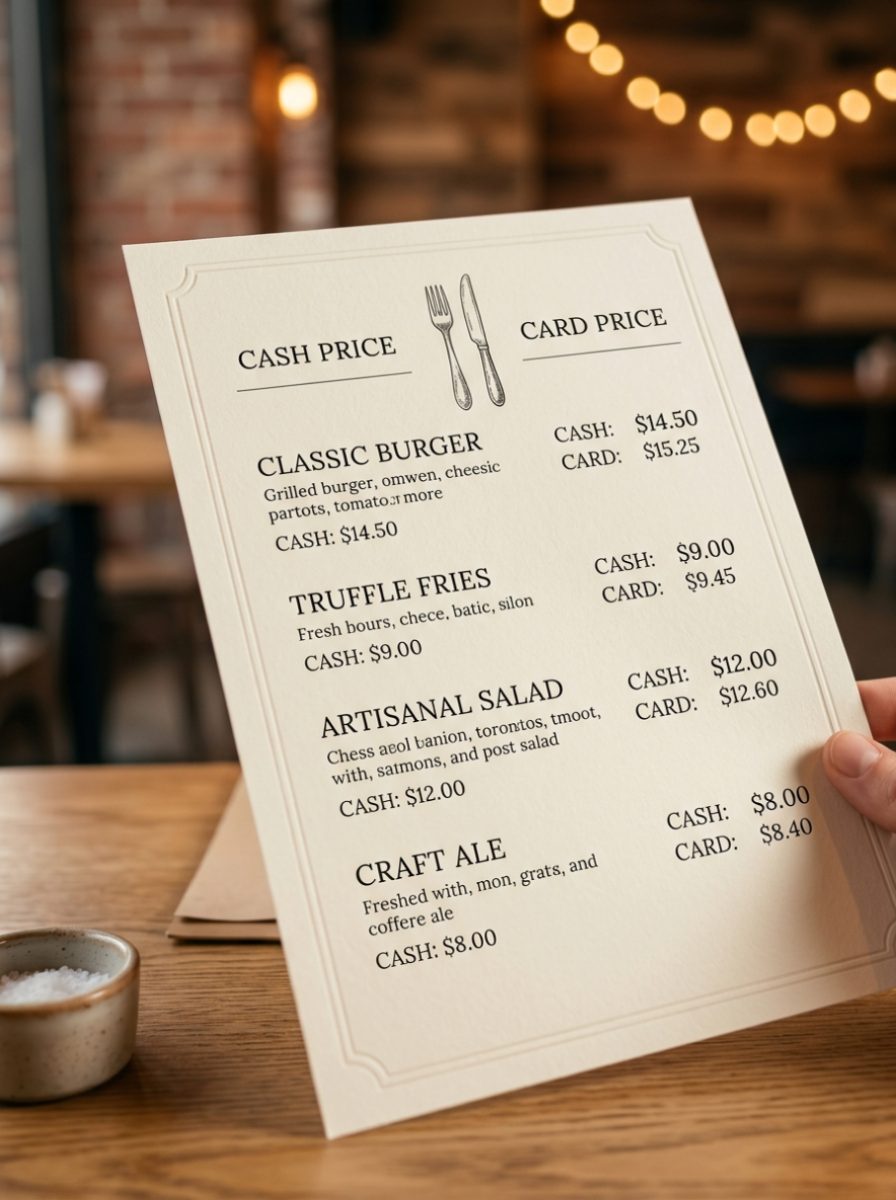
Your menu already has prices. Dual pricing simply means those prices reflect the card price, and cash customers receive a small discount. Signage at the entrance and on the menu explains it clearly. Your POS handles the rest at checkout.
For fast casual and counter service operations it's especially seamless — customers see both prices on the menu board before they ever order. No surprise at the register. No awkward moment with the server.
For full service restaurants, table tents and menu inserts handle the disclosure cleanly. Most guests take it in stride — especially when the server can explain it in one sentence.
| Monthly Card Volume | Current Fees (at 2.9%) | Monthly Savings | Annual Savings |
|---|---|---|---|
| $30,000 | $870 | ~$827 | ~$9,920 |
| $60,000 | $1,740 | ~$1,653 | ~$19,830 |
| $100,000 | $2,900 | ~$2,755 | ~$33,060 |
| $150,000 | $4,350 | ~$4,133 | ~$49,590 |
Savings reflect ~95% recovery rate accounting for cash-paying customers.
Only if it's handled poorly. When pricing is clear upfront — on the menu, at the door — customers process it as information, not a penalty. The friction happens when customers feel surprised at the register. Proper setup eliminates that entirely.
Online ordering platforms are a separate conversation — most have their own fee structures. Dual pricing applies to your in-house card transactions. We'll clarify exactly what's in scope during your analysis.
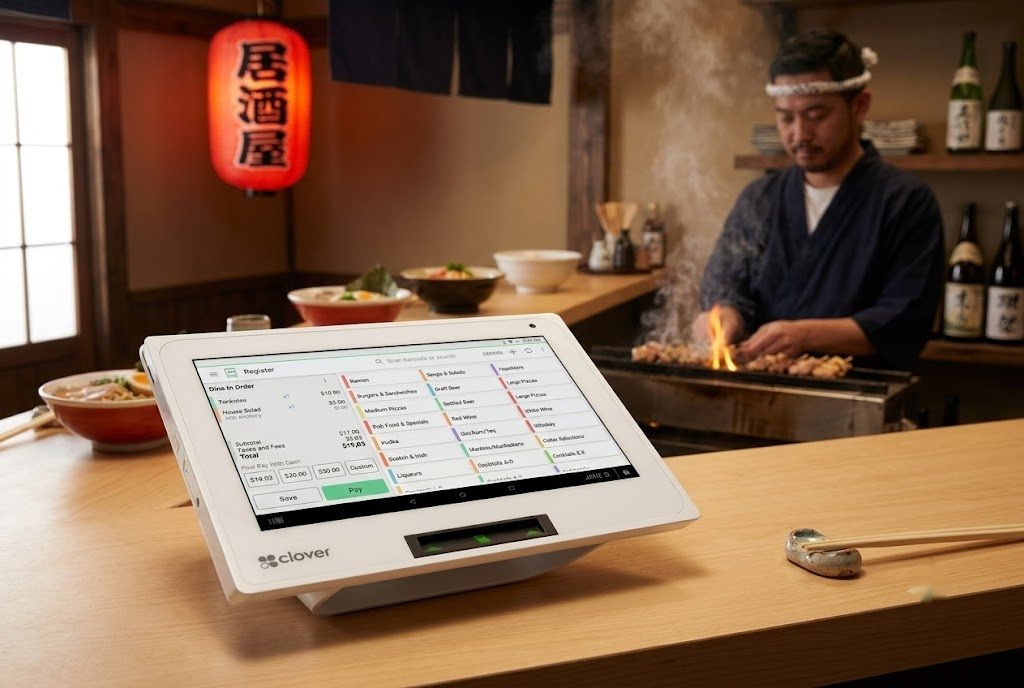
Most modern restaurant POS systems support dual pricing. We'll confirm compatibility with your current system before recommending any changes.
Dual pricing requires clear menu and entrance signage — which we provide. No card network registration required. Works on both credit and debit cards. Compliant receipts generated automatically by your configured POS.
Tight margins, high volume, fast transactions, customer experience sensitivity — we've worked with restaurant operators and we know what matters. When you talk to George, you're talking to someone who gets it.
I was skeptical at first but my customers barely noticed the change. We're saving over $1,600 a month and I wish I'd done it sooner.
George walked me through everything. Our POS was already compatible and we were up and running in four days. The savings showed up on the very first statement.
Free analysis. Real numbers. No obligation. If it's not the right fit we'll tell you straight.
Ready to move forward?